Breast augmentation with implants is among the most requested procedures in aesthetic surgery. Besides the choice of shape, size and position of the implant, the incision technique largely determines the course of the operation, the location of the scar, the healing process and the options for later corrections. There are three approaches that have proven themselves: axillary (armpit), submammary (under the breast fold) and periareolar (edge of the areola). This article gives a clear overview, compares the strengths and weaknesses and shows which technique is suitable in which situation.
In brief – the three approaches at a glance
Submammary
Offers the best overview and the most control and is revision-friendly. Suitable for all implant positions (subglandular, subfascial, submuscular, dual plane); the incision is usually 3–4 cm long, in the breast fold.
Scar & prerequisites
Axillary gives a scar-free appearance of the breast and goes well with submuscular/dual plane; do not lift the arms above shoulder height in the first 10–14 days; revisions are often done submammary. Periareolar camouflages the scar along the edge of the areola, requires an areola of ≥ 3.5–4 cm and is more suitable for subglandular/dual plane with medium-sized implants.
Decision aid
Scar preference + planned implant position + revision plans lead to the choice of approach. With a combined lift, the lift pattern determines the incision; the implant is often placed submammary.
Brief explanation: what do the three approaches involve?
Axillary (armpit, “transaxillary”)
The incision lies in a natural fold of the armpit. The implant is brought to the breast via a tunnel-shaped approach – often with endoscopic support.
Submammary (under the breast fold, “inframammary”)
The incision runs in the existing or newly formed breast fold. This technique offers the most direct view of the operating area.
Periareolar (edge of the areola)
The incision follows the transition of pigment of the areola. The scar often blends in nicely with the colour boundary, but requires certain anatomical conditions.
Consultation and treatment at QUOLE Aesthetics in Eindhoven
In our clinic in Eindhoven, the choice of incision technique is always tailored individually – on the basis of anatomy, choice of implant and the desired result.
Our specialists discuss the options clearly, use examples to show which scar courses in breast augmentation can be expected, and recommend the technique that best combines precision, safety and aesthetics.
Comparison at a glance
Scar location & visibility
Axillary
Scar in the armpit; in a bikini usually hardly visible, with sleeveless clothing visible depending on arm position.
Submammary
Scar in the breast fold; when standing upright and with a suitable fold very inconspicuous.
Periareolar
Scar along the edge of the areola; camouflaged by the difference in colour of the skin.
View & precision during the operation
Axillary
Indirect approach; very precise with an endoscope, less so without an endoscope.
Submammary
Maximum control over all layers and the implant position.
Periareolar
Good control, but limited incision in the case of small areolas.
Suitability for implant positions
Axillary
Often submuscular or dual plane.
Submammary
Suitable for subglandular, subfascial, submuscular and dual plane – very flexible.
Periareolar
More likely subglandular or dual plane with a sufficiently large areola.
Revision options
Axillary
Revision operations are later often carried out pragmatically via the breast fold.
Submammary
Very good; direct access for corrections.
Periareolar
Possible, but dependent on areola size and tissue quality.
Special aspects
Axillary
Scar-free appearance of the breast; initial restriction of arm movement.
Submammary
Reproducible results; with very flat breasts the scar may initially be more visible.
Access to the breast is gained through a small incision in the armpit. An endoscope is often used to prepare the implant space precisely under direct vision. The implant is then placed in the chosen position (usually submuscular or dual plane).
Advantages of the axillary approach:
No visible scar on the breast – a strong advantage for swimwear and bathing suits.
Spares the skin of the breast in the visible area.
Good combination with submuscular/dual plane (especially endoscopic).
Possible disadvantages
Indirect approach: less overview without an endoscope; a lot of experience required.
Revision operations: corrections are often made via the breast fold.
Restricted movement: do not lift the arms above shoulder height in the first days.
Who is it suitable for?
Patients who do not want a scar on the breast and accept a scar in the armpit.
Slim breast shapes with a planned submuscular or dual plane position.
Sporty patients who want an inconspicuous scar pattern on the breast.
Plan your consultation for breast augmentation now
Would you like to know more about the different techniques and approaches of a breast augmentation? Rely on our many years of experience and medical expertise. Book your personal consultation appointment at our clinic in Eindhoven today.
Submammary approach (breast fold)
Course of the operation via the breast fold:
An incision of approx. 3–4 cm in the breast fold allows a direct and clear preparation of the implant space. The implant position – subglandular, subfascial, submuscular or dual plane – can be determined precisely under full vision.
Advantages of the submammary approach
Maximum control over the operating area and the implant position.
High reproducibility – important for symmetry and stability.
Flexibly applicable for all implant positions, sizes and shapes.
Revision-friendly: later corrections are straightforward.
Possible disadvantages
With little breast volume the scar may initially be more visible, but usually settles into the fold later.
If there is a tendency to hypertrophic scars, intensive scar care makes sense.
Who is it suitable for?
Patients who prioritise plannability and precise control.
Suitable for a planned dual plane technique, larger implants or combined indications (e.g. slight shape correction).
Recommended when future revisions should remain as simple as possible.
Periareolar approach (edge of the areola)
Course of the breast augmentation via the areola
The incision runs in a half-moon shape along the transition between the areola and the surrounding skin. The implant space is prepared via this approach. A sufficiently large areola is a prerequisite.
Advantages of the periareolar approach
Very inconspicuous scar owing to the difference in colour and structure at the edge of the areola.
Good view of the glandular tissue; quick access with suitable anatomy.
Possibility of carrying out corrections to the areola at the same time (e.g. in the case of asymmetry).
Possible disadvantages
Anatomical limits: small areolas limit the length of the incision and the room to manoeuvre.
Sensation & breastfeeding: temporary changes in sensation possible; proximity of the milk ducts requires a particularly careful technique.
Flora of the milk ducts: studies point to a possibly increased risk of capsular contracture; strict antisepsis is essential.
Who is it suitable for?
Patients with a sufficiently large areola and the wish for a scarcely visible scar on the breast.
Suitable for a subglandular or dual plane position and medium-sized implants.
Which incision technique suits which implant placement?
The choice of approach is closely linked to the position of the implant:
Subglandular (under the gland)
Periareolar and submammary offer a short route; axillary is possible, depending on the technique.
Subfascial (under the connective tissue layer)
Often submammary, because the fascia can be displayed precisely in this way.
Submuscular (under the large pectoral muscle)
Axillary (endoscopic) and submammary are tried and tested; the submammary approach allows very precise dual plane preparation.
Dual-plane
Mainly submammary because of the excellent control; axillary is also possible with the right expertise.
Factors that influence the decision
Anatomy and tissue quality
Skin elasticity, breast base, areola size, submammary fold, symmetry.
Visibility in swimwear versus the armpit region; personal preferences.
Tendency to conspicuous scars
Individual wound healing, family predisposition; possibly more intensive scar care.
Combined procedures
With a simultaneous breast lift (mastopexy), the incisions change (e.g. vertical or T-shaped). The lift pattern is decisive here; implants are often placed submammary.
Future revisions
Submammary offers the most flexibility for an exchange or adjustment.
Plan your consultation for breast augmentation now
Are you considering a breast augmentation and would you like to know more about the different incision techniques? Rely on our long experience and specialist expertise. Make your personal appointment at our clinic in Eindhoven today.
Recovery period & scar care – depending on the approach
In general: a compression bra, physical rest, sleeping on the back and avoiding pressure on the implants support recovery. Follow-up appointments and, if necessary, imaging aftercare safeguard the quality of the result.
Axillary
No arm movements above shoulder height for the first 10–14 days.
Keep the armpit area dry; avoid tight straps.
Scar care: silicone gel/plasters after wound closure, later UV protection.
Submammary
Keep the submammary fold clean and dry; underwires must not irritate the scar directly.
Early, gentle scar massage after the doctor’s consent.
UV protection and silicone therapy to reduce conspicuous scars.
Periareolar
Careful hygiene, as the areola is pigmented and may be sensitive.
If there is a tendency to pigment shift, use sun protection consistently.
Use gentle care products, no aggressive peelings in this area.
Risks – realistically assessed
Every operation carries general risks, such as bruising, swelling, post-operative bleeding, infection, wound healing disorders, fluid accumulation (seroma) and intolerance to suture material. Specific aspects of breast augmentation include:
Capsular contracture/capsule formation
Hardening of the connective tissue capsule; rare, risk depends on technique, germ control and individual tissue reaction.
Changes in sensation of the nipple
usually temporary. With the periareolar approach there is an anatomical proximity to nerves and milk ducts.
Asymmetries or implant displacement
careful surgical technique and adequate aftercare reduce the risk.
Conspicuous scars
hypertrophic scars or keloids are rare, but possible – consistent scar care helps.
A thorough preliminary examination, sterile operating conditions, atraumatic preparation, rinsing of the implant, “no touch” placement and structured aftercare reduce these risks considerably.
Decision aid: checklist for the consultation
Where is a scar likely to be least bothersome: armpit, submammary fold or edge of the areola?
Are larger implants or a dual plane placement planned, where particularly precise preparation is important?
Is there a tendency to conspicuous scars?
Is the areola large enough for a comfortable periareolar approach?
Should revision options remain as simple as possible later?
Is an additional lift likely – now or in the future?
With these points, a clear preference emerges in the conversation.
Axillary
Usually not; with high-cut tops sometimes visible depending on arm position.
Submammary
Well hidden in the fold; with very small breasts initially more visible.
Periareolar
Often hardly visible at the colour boundary.
Can breastfeeding still be done later?
As a rule, yes. The periareolar approach lies closer to the milk ducts; an experienced surgeon works in a tissue-sparing way to minimise the risk.
Which technique causes the least pain?
The experience of pain is individual. Submuscular placements often cause more muscle tension at the start – regardless of the approach.
Is the axillary technique suitable for very large implants?
Possibly, depending on the tissue and surgical experience. With large volumes, the submammary approach often offers more control.
What applies if a breast lift is also needed?
With a combined mastopexy, the lift patterns (e.g. vertical, L- or T-shaped) determine the incisions. The implant is often placed submammary.
Conclusion on the different incision techniques in breast augmentation
Axillary, submammary or periareolar – every incision technique has clear advantages.
Axillary
scores with a scar-free appearance of the breast and is especially suitable for submuscular/dual plane placements, but requires endoscopic experience.
Submammary
offers maximum control, high reproducibility and very good options for later corrections – a versatile standard.
Periareolar
provides an elegantly camouflaged scar, but requires suitable anatomy and particular care near the milk ducts.
The best choice arises from an individual weighing up of anatomy, implant, desired implant position, scar preference and revision safety. A structured consultation brings clarity – and leads to a result that convinces in daily life.
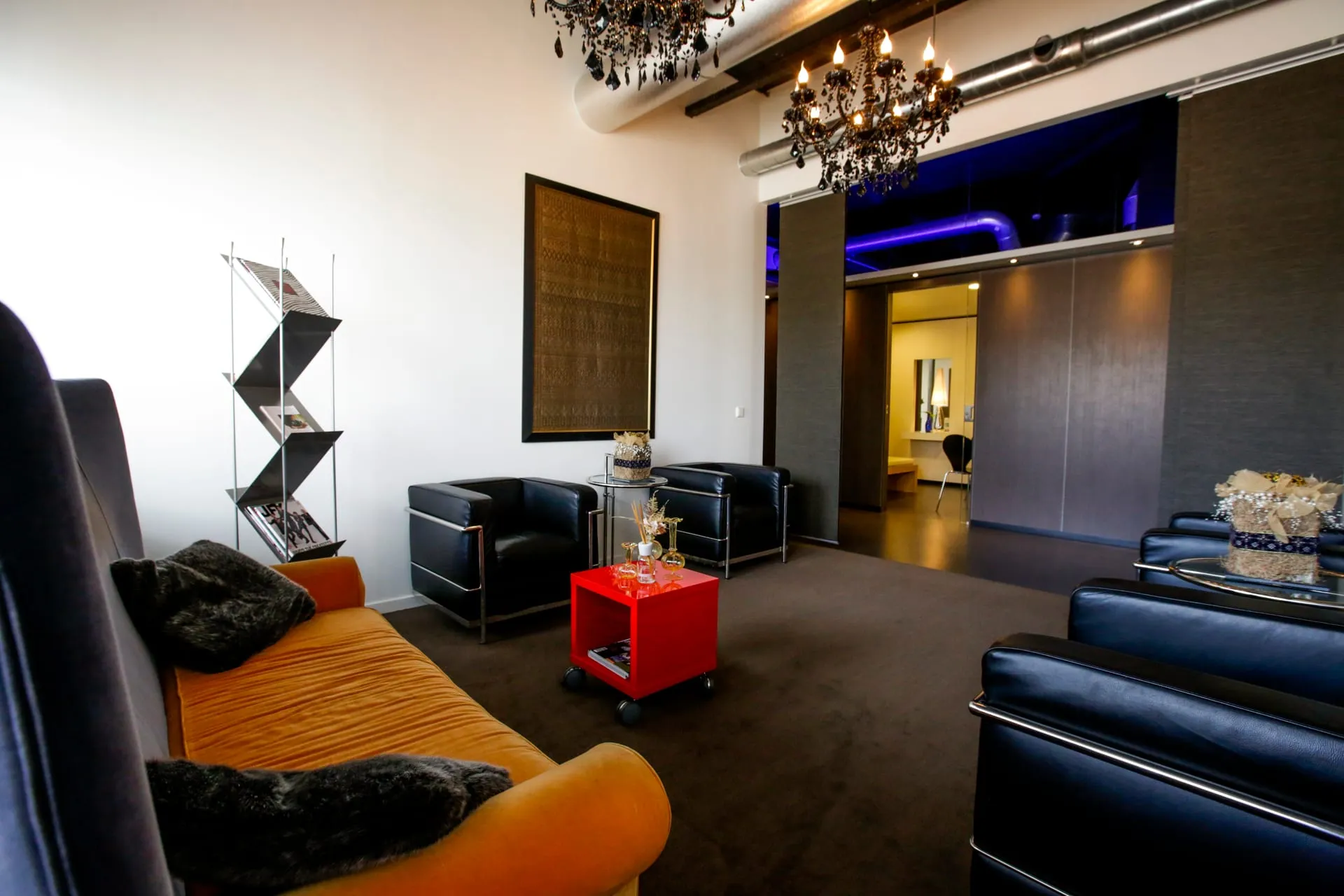
The building
Your treatment in Waalre.
Medisch Centrum Waalre, Van Dijklaan 9 in Waalre, just south of Eindhoven. Easy to reach from Eindhoven, Veldhoven, Valkenswaard, Geldrop and Heeze.
Had a breast reduction in October 2024. I can only look back on it with praise. What a great surgeon, Dr H. Hawinkel, with a great team around him in every respect. Thank you all for the beautiful result, the care and the aftercare! You're all stars!
Breast reduction · August 2025 · ZorgkaartNederland
Had my balloon refilled last week. And, like the first time when it was placed, a very nice, friendly welcome. No tension at all because they treat you so kindly and properly.
Claudia B. · August 2025 · ProvenExpert
Came to Dr. Boons with knee problems. Through the clinic's arrangement, the imaging could be scheduled within a day. Dr. Boons's explanation was very clear and he took all the time it needed. Very satisfied!
Knee ligament injury · June 2025 · ZorgkaartNederland
A dermatologist looks, assesses and treats straight away. Doctor Debije does this promptly and so fully meets my expectations!
May 2025 · ZorgkaartNederland
I was able to get in at Quole very quickly to have suspicious spots removed. I was helped in an expert and pleasant way. The assistant also thought along well to schedule the appointments so that they fitted in with my work.
Skin cancer · May 2025 · ZorgkaartNederland
Very satisfied with the medical secretaries as well as the doctor and all the care staff in between. Everyone took my difficult situation very seriously and acted quickly. I really felt heard. Doctor Hawinkel is a nice doctor. Thank you all!
Plastic surgery · April 2025 · ZorgkaartNederland
After going round the Netherlands, I ended up, through word of mouth, with dermatologist Dr. Debeij at Quole. In a word: a super dermatologist. I have never been helped so well anywhere else. I am very grateful.
February 2025 · ZorgkaartNederland
Got an appointment with the doctor extremely quickly with the help of supporting staff. Helped pleasantly and quickly
Meniscus injury · January 2025 · ZorgkaartNederland
Nice and homely, relaxed. I don't feel like a number but really like a patient. Helped quickly and smoothly! No long waiting times like in hospitals
Meniscus injury · January 2025 · ZorgkaartNederland
Very satisfied! A good and competent clinic.
Knee ligament injury · October 2024 · ZorgkaartNederland
Good information beforehand and during. Short waiting time, coordination. Professional, expert and friendly delivery of care. Careful and personal aftercare.
September 2024 · ZorgkaartNederland
I was helped very well
Knee ligament injury · June 2024 · ZorgkaartNederland
I was helped very well, unfortunately had a lot of bad luck, had good contact every day. And the corrective operation is planned. Completely satisfied
Plastic surgery · May 2024 · ZorgkaartNederland
On 28 Sept 2023 I had my tummy tuck, Fleur de lis, done. Doctor Donders operated on me and how good this doctor is, an artist! Happy every day with my decision and the result. I was treated well from day 1, they listened to me and thought along with me. I was well informed about what would suit me best. Super lovely staff and the doctor. Everyone is lovely, friendly and helpful. Once again, thank you all for the good care. Would do it the same way again without a doubt. This clinic and doctor are highly recommended.
May 2024 · ZorgkaartNederland
Finally I ended up with a dermatologist who told me very well and explained what caused my problem. Fortunately, this dermatologist did help me well.
May 2024 · ZorgkaartNederland
From my first appointment I have been very, very satisfied, with friendly people, professional too. I'm glad I chose QUOLE Medisch Centrum Waalre, thank you
May 2024 · ZorgkaartNederland
Appointments were made easily, and they kept asking whether the doctor's explanation was clear. The care around the operating theatre was also very good. There was good aftercare in the recovery room. You are a person and not a number.
Knee ligament injury · April 2024 · ZorgkaartNederland
Very satisfied with the short waiting time and the friendliness.
Frozen shoulder · April 2024 · ZorgkaartNederland
The biggest plus of Medisch Centrum Waalre for me was the speed with which they were able to help me. I could only get a first appointment at a hospital after 6 weeks, but in Waalre I could come in after just 2 days, and I was even operated on here within those 6 weeks! Above all, save yourself time!
Knee ligament injury · March 2024 · ZorgkaartNederland
Very, very satisfied with the care I received. A personal approach, and at every moment they calmly take time for you.
February 2024 · ZorgkaartNederland
I went to Quole Medisch Centrum because of the dermatologist who has recently started working there. I used to go to this friendly and capable dermatologist before as well. As for Quole Medisch Centrum: a very beautiful building with presence, inside and out. Good service, friendly and no long waiting times. If you don't want to wait long, this medical centre is very good, with very capable doctors and staff working there. Recommended by a very satisfied patient.
Skin conditions · February 2024 · ZorgkaartNederland
I am very satisfied with dermatologist Debeij. A very skilled dermatologist who has always helped me really well. I was already going to this dermatologist when she still had her own clinic, because of less good experiences with other dermatologists. I have to drive a lot of km to get to Dr. Debeij, but it's worth it to me.
February 2024 · ZorgkaartNederland
Quole is a really nice medical centre. You are helped quickly and well looked after. The employees are all very kind!
Knee ligament injury · November 2023 · ZorgkaartNederland
Expert approach and solution to my problem. Super friendly and caring team of healthcare professionals.
Inguinal hernia · November 2023 · ZorgkaartNederland
All the staff around my hallux valgus operation radiate calm and friendliness. There is a relaxed and informal atmosphere in the clinic. You are understood and seen.
August 2023 · ZorgkaartNederland
Very fast, appropriate help and appointments that followed on well from one another. Top-notch organisation
Osteoarthritis · June 2023 · ZorgkaartNederland
Received clear information about the necessary treatment and the effect to be expected from it
May 2023 · ZorgkaartNederland
I was treated very well. They explained clearly what I could expect beforehand and also what to expect after the operation in terms of recovery.
Knee ligament injury · April 2023 · ZorgkaartNederland
As described in Quole's communication, you are treated as a guest. And that is true. The consultations, the operation itself and the aftercare were not only extremely professional but also very personal, friendly and unhurried. People with an eye and a genuinely listening ear both for your physical wishes/changes in appearance and for your state of mind (tension, fear, calm, self-confidence). Thanks to Dr. Donders for the clear advice, the plan and above all the beautiful result!
Breast augmentation · April 2023 · ZorgkaartNederland
The clinic's personal approach is very pleasant. You are treated not as a number but as a guest.
Knee ligament injury · March 2023 · ZorgkaartNederland
What a lovely clinic with friendly, professional care. There is a pleasant, caring atmosphere and Dr Hawinkels is a likeable, skilled plastic surgeon.
March 2023 · ZorgkaartNederland
They take me seriously
December 2022 · ZorgkaartNederland
The whole process went very well. Both beforehand during the intake consultation, and on the day of the operation and at the final consultation. The day after the operation, a member of staff kindly called me to ask whether everything had gone well and how I was doing. A small-scale, committed and very expert team. Compliments